AI newsUpdate
Meta Muse Ember API price: $0.10 / $0.50, 1M context
Meta's Muse Ember: price tiers, 1M context, 512K output, and what a 50-step agent session costs, with a cheap-subtask alternative.
On this page
Meta's new Muse Ember is a small model built for the cheap, repeated steps inside an agent, and per Meta's announcement it costs $0.10 for input and $0.50 for output per 1M tokens on prompts up to 200K tokens. Above 200K the price triples. A 50-step agent session of 20K tokens in and 500 out per step comes to about $0.11 on Ember, and the same role is open to you at CheapTokens with DeepSeek-V4-Flash.
The model was announced on November 9, 2026 on Meta's research blog (research.meta.ai/blog/muse-ember); the post shows a date but no time. We checked the blog and the model page at dev.meta.ai on November 10, 2026.
What Meta announced#
Muse Ember (model id muse-ember-1.0) is the smallest and most efficient model in Meta's Muse line, aimed at agent subtasks: tool calls, extraction, routing, parsing long documents. You can reach it in Muse Code, the Meta Model API (Standard mode only), Google Cloud and Oracle Cloud. Meta does not announce open weights, so API and Muse Code are the way in. Regions are not stated.
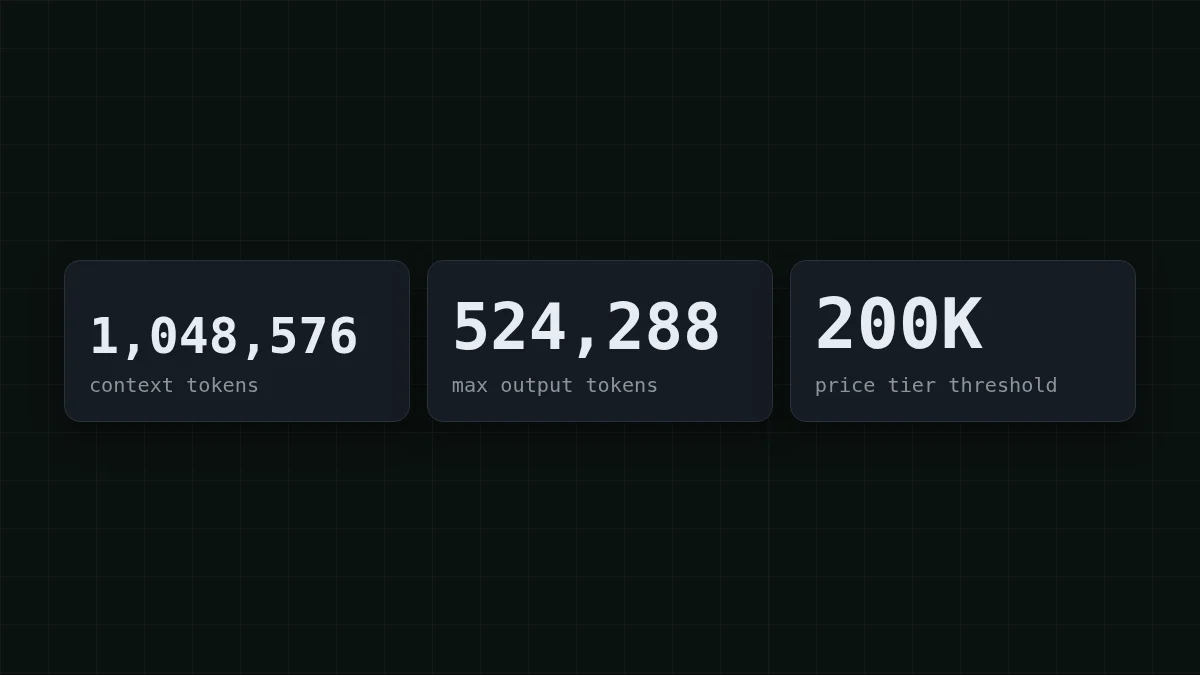
The limits from Meta's model page (dev.meta.ai/docs/muse-ember, no date on the page). Context window — 1,048,576 tokens, maximum output — 524,288 tokens, and the higher price tier starts above 200K tokens of prompt.
It takes text, image, video, audio and PDF as input and returns text. You can call it through the Responses, Chat Completions or Messages endpoints, with tool calling, structured output, computer use, image understanding and search grounding. Reasoning effort runs from minimal to max, and the default is max. Streaming isn't mentioned on the page, so we won't claim it.
Meta also published benchmark numbers, and they are Meta's, mostly at max reasoning: Terminal-Bench 4.0 at 40.9% against 39.2% for Haiku 5.5, AutomationBench-AA at 37.8% against 13.9% and 20.2% for the two others Meta lists, and FrontierCode 2.0-AA at 27.2%, behind Haiku 5.5 at 34.9%. On the Artificial Analysis Intelligence Index it scores 36 against 37 for Muse Spark 1.3. Treat them as a vendor's claim until you run your own cases.
What a 50-step session costs on Ember#
The price table, per Meta's announcement (the model page itself points to a pricing page without figures):
Scroll the table right →
| Prompt size | Input | Cached input | Output |
|---|---|---|---|
| up to 200K tokens | $0.10 | $0.004 | $0.50 |
| over 200K tokens | $0.30 | $0.012 | $1.50 |
Prices are per 1M tokens, checked November 10, 2026. Secondary sources describe the over-200K rule differently, so confirm it on Meta's pricing page before you budget around it.
Now a session. Say your agent does 50 steps, and each step sends about 20K tokens (the growing history plus tool results) and gets about 500 tokens back. That's 1M tokens in and 25K out in total. On Ember: 1 × $0.10 + 0.025 × $0.50 = $0.1125 (token counts in millions). The input side is almost the whole bill, which is why the cached-input price of $0.004 matters if your agent keeps the same prefix.
Guess the number
Say the higher rate applies to the whole prompt (that's how Meta's wording reads). How many cents does the input of a 250K-token prompt cost on Ember?
Your guess
020
Show answer
Answer: 7.5
If the higher rate applies to the whole prompt: 250,000 × $0.30 per 1M = $0.075, so 7.5 cents for the input alone. Fifty such steps would be $3.75 of input.
Why long prompts at all? Because agents re-send history on every step; if that's new to you, why an agent re-reads its whole history explains it with a small example.
Which tier is your prompt in?#
The 200K line is the one to watch. Meta lists rates three times higher for longer prompts: $0.30 for input, $0.012 for cached input and $1.50 for output.
Pick your case
Where does your agent's biggest request sit?
Choose an option to see the answer
Under 200K tokens
You stay in the lower tier. Budget with $0.10 in / $0.50 out and watch the output side if you keep reasoning effort at the default.
Between 200K and 1M tokens
The higher tier applies, and Ember's 1,048,576-token window still fits you. Trim old tool output before it crosses 200K, or split the job so only one step carries the full document.
Over 1M tokens
It doesn't fit one request. Chunk the input and let a planner merge the results.
The same cheap-subtask role at CheapTokens#
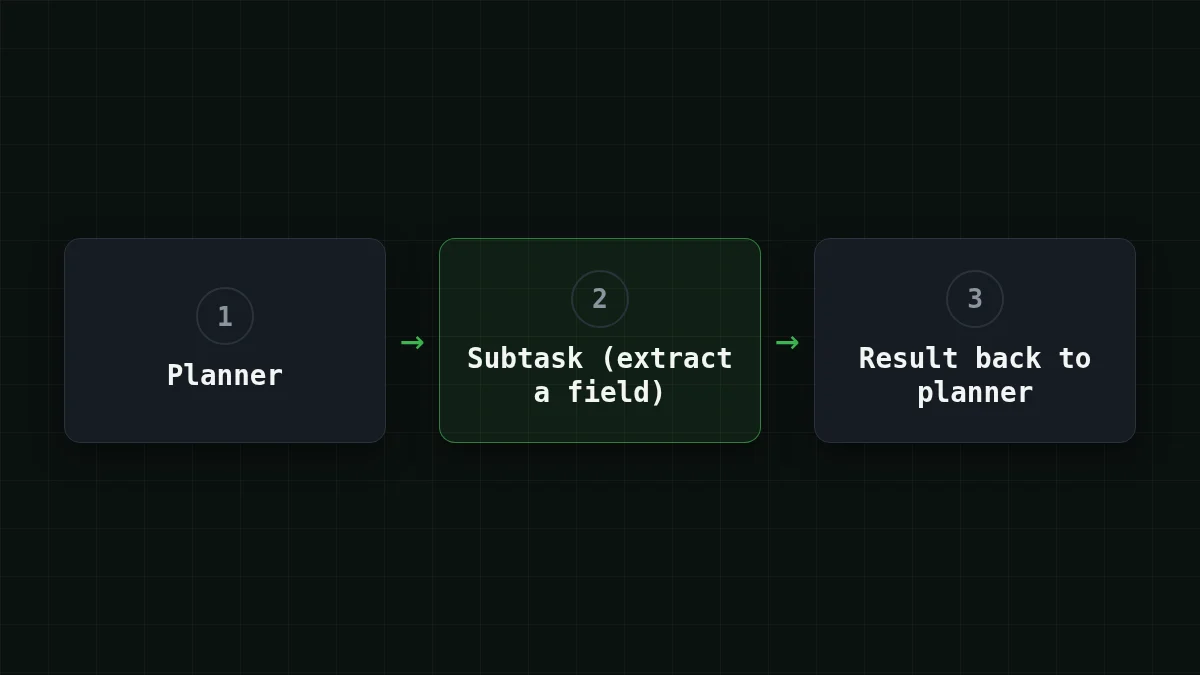
A common agent layout keeps a bigger model for planning and sends the repeated subtasks to a cheap one. For that second seat, CheapTokens has DeepSeek-V4-Flash: a 380K context, up to 32,768 output tokens per answer, one price at any time of day with no peak hours, an OpenAI- and Anthropic-compatible API, and one balance across all models. GLM-5.3-Flash is the other option for tool-call loops and long-document parsing, with a 390K context and up to 8,192 output tokens. Run 20 of your own subtasks on DeepSeek-V4-Flash and compare the results by the usage field.
Here is the same 50-step session, 20K tokens in and 500 out per step, priced live:
| Model | Input $/1M | Output $/1M | Per request | 50 requests | OpenRouter, 50 requests |
|---|---|---|---|---|---|
| GLM-5.3-Flash | $0.02 | $0.04 | $0.00042 | $0.021 | $0.0356 |
| DeepSeek-V4-Flash | $0.015 | $0.10 | $0.00035 | $0.0175 | $0.0735 |
| MiniMax-M2.7 | $0.05 | $0.15 | $0.0011 | $0.0538 | $0.645 |
20,000 input and 500 output tokens per request. Prices per 1M tokens are current and change together with our tariffs; the OpenRouter column shows reference prices for the same workload.
The DeepSeek-V4-Flash line for the whole session is $0.0175; in total, with input and output counted together, it comes out cheaper than OpenRouter's reference price for the same model. Prices on this page update on their own.
Trying it takes one request. The key goes in an environment variable, and the model id is the full one from the docs (the docs have the list; pricing the current rates):
curl https://api.cheaptokens.dev/v1/chat/completions \
  -H "Authorization: Bearer $CHEAPTOKENS_API_KEY" \
  -H "Content-Type: application/json" \
  -d '{
    "model": "deepseek-ai/DeepSeek-V4-Flash-0731",
    "messages": [{"role": "user", "content": "Extract the order number from: Order #48213 shipped today."}],
    "max_tokens": 100
  }'
The reply has the usual usage object, so you can read the real input and output tokens of your subtask and plug them into the table above. For the routing pattern itself, see model routing: cheap model first, escalate and, for more on the model, DeepSeek on CheapTokens.
Watch the output side#
Ember's default reasoning effort is max, and Meta's own benchmark numbers were mostly run that way. A subtask that only has to pull a field out of a document doesn't need it, and higher reasoning effort can mean more output tokens, the pricier side. Meta's pages don't say how reasoning tokens are counted, so read usage rather than assume.
Try it yourselfTry it: how do you find out what one subtask really spends?Show answer
Send 20 real subtasks at the lowest effort setting, then at the default, and read usage in each reply. Multiply the average input and output by your steps per day and work out the cost at Ember's prices from the table above. If the answers match on your cases, the cheaper setting is the one to keep. Why that works is in reasoning effort and thinking tokens.
The practical read for builders: Ember is priced for the cheap seat in an agent, the 200K line is the number to design around, and the only figure that settles it is the one from your own usage field.


